
From the Sensex pack, Zomato jumped over 7 per cent. ICICI Bank, Mahindra & Mahindra, Tata Motors, Larsen & Toubro, Asian Paints, Titan, Kotak Mahindra Bank and State Bank of India were among the gainers. However, Bajaj Finserv, Bharti Airtel, Tech Mahindra and Reliance Industries were the laggards.

A lower risk appetite among investors has driven gold, traditionally a safe-haven asset, to record highs so far this year. Fuelled by geopolitical tensions in West Asia, robust demand from central banks - particularly in Asia - and US President Donald Trump's tariff volleys, spot gold touched an all-time high of $2,956 per ounce on February 24 in the international markets.

The bad assets or gross NPAs of commercial banks fell to a 12-year low of 2.8 per cent in March 2024 and may go down further to 2.5 per cent by the end of the current fiscal, said the RBI's Financial Stability Report (FSR) released on Thursday. Scheduled Commercial Banks' (SCBs) gross non-performing assets (GNPA) ratio fell to 2.8 per cent, and the net non-performing assets (NNPA) ratio to 0.6 per cent at the end of March 2024. "The asset quality of SCBs recorded sustained improvement, and their GNPA ratio moderated to a 12-year low in March 2024. Their NNPA ratio too improved to a record low," said the June FSR.

Investor interest in banks and real estate companies dipped and these stocks witnessed correction post the policy announcements.

618 companies were part of the billion dollar club when the markets reached all-time highs on September 26, 2024. That number has fallen to 500 following a $1 trillion wipeout in India's market capitalisation amid relentless selling by FPIs.

It has mostly been a one-way street for smallcap stocks that have taken it on their chin thus far in February. The Nifty Smallcap 250 index has shed 3.2 per cent in the current month as compared to the 1.8 per cent decline in the Nifty Midcap 100 and the 0.5 per cent drop in the Nifty 50 index, data showed. Technically, the index has slipped below its 20-day moving average (DMA) placed at 14,800 levels on Monday, and is currently testing the 50-DMA, and is placed at 14,278 levels.

Ask rediffGURU and PF and MF expert Janak Patel your mutual fund and personal finance-related questions.

Among Sensex shares, Tech Mahindra fell by over 6 per cent after the company reported a 60 per cent decline in net profit to Rs 510.4 crore in the December quarter. Bharti Airtel, ITC, HCL Technologies, Asian Paints, Wipro, HDFC Bank, Nestle, Tata Steel, Tata Consultancy Services and Maruti were among the other major laggards. NTPC, ICICI Bank, IndusInd Bank, Reliance Industries, JSW Steel, Bajaj Finance, Bajaj Finserv and Mahindra & Mahindra were among the gainers.
All Sensex shares, except for Hindustan Unilever, ended with losses. Tata Steel fell the most by 7.33 per cent followed by Larsen & Toubro which cracked 5.78 per cent. Tata Motors, Kotak Mahindra Bank, Mahindra & Mahindra, Infosys, Axis Bank, ICICI Bank, HCL Technologies and HDFC Bank were the other big laggards. Hindustan Unilever ended marginally higher.

Ask rediffGURU and tax expert Mihir Tanna your income tax-related questions.

Tata Motors was the biggest gainer in the Sensex pack, rallying 2.94 per cent. It was followed by Vedanta, Bajaj Finance, Sun Pharma, ONGC, ICICI Bank, Bajaj Auto, Tata Steel, RIL, HDFC duo, L&T and SBI, rising up to 2.78 per cent.
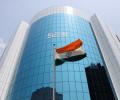
The market regulator's newly proposed selection criteria for the over Rs 400-trillion-a-day futures and options (F&O) market could pave the way for the entry of popular stocks such as Life Insurance Corporation (LIC) of India, Jio Financial Services, Zomato, Paytm, DMart, and Adani Energy into the derivatives segment. The Indian derivatives market, which accounts for most of the trading volumes, could see big churn with over two dozen exits from the current list of 182 stocks due to an upward revision in the eligibility thresholds.
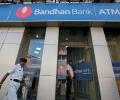
Bandhan Bank has declared disappointing results for the first quarter of the 2023-24 financial year (Q1FY24). While the market has been braced for known issues around microfinance exposures in West Bengal and Assam, there is higher stress in the portfolio. This means higher credit costs and poorer asset quality, leading to target downgrades by analysts.

As the Indian stock markets tumble under the panic set off by US President Donald Trump's tariff tantrums, three market experts weigh in on the reasons behind this fall, how much pain is left and how should investors adapt their strategies to invest in markets.

From the Sensex basket, Infosys, IndusInd Bank, Bajaj Finserv, Wipro, HCL Technologies, Bajaj Finance, Tech Mahindra, Tata Consultancy Services, and Larsen & Toubro were the major laggards. Titan Company, Hindustan Unilever, HDFC Bank, Maruti, ITC, Power Grid and Reliance Industries were the gainers.

Shares of public sector enterprises have corrected by up to 22 per cent month-to-date until March 19, 2024. Analysts attribute this steep fall to the valuation exuberance seen after a sharp run in these counters last year and suggest investors remain selective regarding the stocks in this space. "The rally in public sector undertaking (PSU) stocks has been stretched and sharp, although it is somewhat justified by improvements seen in earnings, operations, balance sheets, and overall profitability.

From the Sensex basket, Bajaj Finance, Mahindra & Mahindra, HDFC Bank, JSW Steel, Maruti, Wipro, Bharti Airtel, Bajaj Finserv, ICICI Bank and ITC were the major gainers. Nestle India, HCL Technologies, Larsen & Toubro, Tata Consultancy Services, Tata Motors and Infosys were among the laggards.

Tata Steel was the biggest gainer in the Sensex chart, rising 2.39 per cent, followed by Tata Motors, Power Grid, Reliance Industries, UltraTech Cement, NTPC, Nestle, HUL, Mahindra & Mahindra, Wipro, Kotak Mahindra Bank and Asian Paints. In contrast, Bajaj Finance, IndusInd Bank, Axis Bank, Bharti Airtel, Bajaj Finserv, ICICI Bank, Infosys and Titan were among the laggards.

The risk-reward for the Indian markets, Morgan Stanley said, is turning favourable.

In May, MFs were the net sellers in several PSUs, as they deployed Rs 47,600 crore in equities during the month.
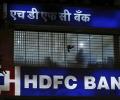
HDFC Bank's latest shareholding data showed that the room for foreign investment has fallen just 5 basis points short of the threshold set by Morgan Stanley Capital International (MSCI) to fully include the stock in its indices. Currently, the index provider has applied an adjustment factor of 0.5 since the foreign room is less than 25 per cent. Removal of the adjustment factor will result in inflows of a massive $4.8 billion (Rs 40,000 crore) into HDFC Bank, according to Brian Freitas, a New Zealand-based analyst with Periscope Analytics.

Morgan Stanley removed banking stocks from its model portfolio when it slashed its weighting on the sector by 500 basis points. Several foreign brokerages, such as UBS, JP Morgan, and Credit Suisse, of late, have also become less optimistic about banking stocks.

Shares of One97 Communications (OCL), which provides financial services under the brand 'Paytm', and has a banking arm Paytm Payments Bank (PPBL), hit the 5 per cent upper circuit at Rs 428.10 on the National Stock Exchange (NSE) in Monday's (February 26) intraday trade. The up move in the stock on Monday came after the Reserve Bank of India (RBI) asked the National Payments Corporation of India (NPCI), in post stock market hours, to look into the possibility of migrating PPBL customers, using the UPI handle '@paytm', to four-to-five other banks.

These stocks offer the best combination of maximum 'buy' recommendations from brokerages and share price upside over the next 12 months.

'Tax rate and stock markets are entirely two different things.'

The NSE Nifty ended at 2,719, up 102 points. The market breadth was fairly positive - out of 2,551 stocks traded, 1,583 advanced, 855 declined and 113 were unchanged on Friday.

From the Sensex basket, Power Grid, Asian Paints, Tata Motors, Tata Steel, NTPC, Sun Pharma, Mahindra & Mahindra, HDFC Bank, Tata Consultancy Services and JSW Steel were among the major gainers. Kotak Mahindra Bank, Bharti Airtel, Axis Bank, Wipro, ICICI Bank and IndusInd Bank were among the laggards.

Bajaj Finserv, Tata Steel, Larsen & Toubro, UltraTech Cement, Kotak Mahindra Bank and Tata Motors were among the gainers. Foreign Institutional Investors (FIIs) offloaded equities worth Rs 4,486.41 crore on Tuesday, according to exchange data.

Overall market reaction to the Budget was neutral. Investors absorbed the changes to the tax rates (positive for salaried class) and capital gains taxes (CGTs, negative due to the removal of indexation and increases. Other proposals largely pertain to supporting rural development, buybacks taxed as dividends, Custom duty changes that impact multiple sectors, higher outlays for clean energy, etc. There's some moderation in the growth of capex outlay across defence, fer
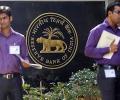
The Reserve Bank of India (RBI) has sought details about lenders' exposures to the Adani Group, banking sources said, a day after the conglomerate withdrew the Rs 20,000-crore follow on public offer (FPO) of its flagship firm Adani Enterprises amid the steep fall in its stock prices. On Wednesday, Swiss lender Credit Suisse stopped accepting bonds by Adani group companies as collaterals for margin lending. The going has been tough for the diversified conglomerate over the past week ever since US-based short seller Hindenburg Research levelled a slew of allegations about the group's operations, calling it the biggest corporate con ever.

Among the 30 Sensex companies, Mahindra & Mahindra, Power Grid, Sun Pharma, Nestle, UltraTech Cement, NTPC, ITC, ICICI Bank, Titan, Bajaj Finserv, Bharti Airtel, and HDFC Bank were among the biggest gainers. IndusInd Bank, Adani Ports, Tata Steel, Reliance Industries, Axis Bank and Bajaj Finance were among the laggards.

Brokerages expect a further slowdown in Indian firms' revenue and earnings growth in Q4FY25, following low single-digit growth in the preceding three quarters, as factors like weak consumer demand and credit growth linger on.

The US Fed interest rate decision, trading activity of foreign investors and quarterly earnings from corporates would largely drive the momentum in the equity market this week, analysts said. Escalating tensions between India and Pakistan over the Pahalgam terror attack will also remain on investors' radar, they added.

'Even if India is attractive, FPIs currently lack the funds to invest, as money is being redirected to the US.'

10 largecaps stocks which stand to gain from the Budget.

India's stock markets corrected recently but foreign money is likely to chase China rather than India in the short-to-medium term, said Chris Wood, global head of equity strategy at Jefferies, on Thursday. Wood told the Business Standard Manthan Summit in New Delhi he is bullish about Indian equities from a long-term perspective, but for the short term he is cautious given the quantum of foreign investor (FII) outflows and valuation woes.

The escalating military tension between the two nations, a deluge of information, and the inability to sift through fake and real news can significantly affect the psychological well-being of individuals, said mental health experts.

The Supreme Court on Friday declared JSW Steel Limited's resolution plan for Bhushan Power & Steel Limited (BPSL) "illegal" and ordered the latter's liquidation, four years after the company was acquired by JSW Steel under the Insolvency and Bankruptcy Code (IBC). Following the ruling, JSW Steel shares fell sharply.

Finance Minister Nirmala Sitharaman on Saturday said the GST rates will come down further and the work on rationalising tax rates and slabs has "almost reached a finale". She said that the revenue neutral rate (RNR) has come down from 15.8 per cent at the time of the launch of GST on July 1, 2017, to 11.4 per cent in 2023.

ONGC, Bank of Baroda and HDFC among top gainers
 © 2026 Rediff.com - Advertise with us - Disclaimer - Privacy Policy - Sitemap - Feedback - About us - Terms of use - Grievances